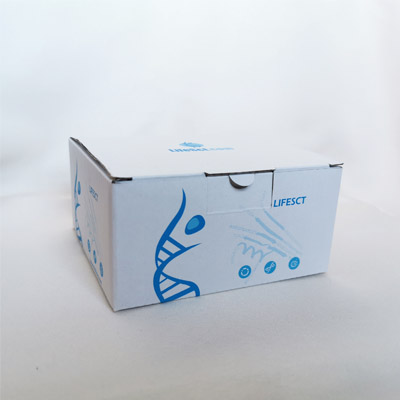
1. Pre-coated, ready to use 96-well strip plate 1
2. Plate sealer for 96 wells 2
3. Standard 2
4. Diluents buffer: 1×45 mL
5. Detection Reagent A: 1×120 μL
6. Detection Reagent B: 1×120 μL
7. TMB Substrate: 1×9 mL
8. Stop Solution: 1×6 mL
9. Wash Buffer (30× concentrate): 1×20 mL
Background
Human platelet glycoprotein V (GP5) is a part of the Ib-V-IX system of surface glycoproteins that constitute the receptor for von Willebrand factor (VWF; MIM 613160) and mediate the adhesion of platelets to injured vascular surfaces in the arterial circulation, a critical initiating event in hemostasis. The main portion of the receptor is a heterodimer composed of 2 polypeptide chains, an alpha chain (GP1BA; MIM 606672) and a beta chain (GP1BB; MIM 138720), that are linked by disulfide bonds. The complete receptor complex includes noncovalent association of the alpha and beta subunits with platelet glycoprotein IX (GP9; MIM 173515) and GP5. Mutations in GP1BA, GP1BB, and GP9 have been shown to cause Bernard-Soulier syndrome (MIM 231200), a bleeding disorder (review by Lopez et al., 1998 [PubMed 9616133])