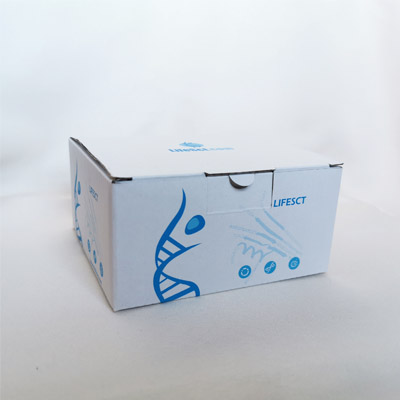
tissue homogenates, cell lysates or other biological fluids.
Experimental method:
Sandwich
Shelf life:
12 months
Gene ID:
4225
UniProt ID:
Q16820
Components:
1. Pre-coated, ready to use 96-well strip plate 1
2. Plate sealer for 96 wells 2
3. Standard 2
4. Diluents buffer: 1×45 mL
5. Detection Reagent A: 1×120 μL
6. Detection Reagent B: 1×120 μL
7. TMB Substrate: 1×9 mL
8. Stop Solution: 1×6 mL
9. Wash Buffer (30× concentrate): 1×20 mL
Background
Meprins are multidomain zinc metalloproteases that are highly expressed in mammalian kidney and intestinal brush border membranes, and in leukocytes and certain cancer cells. They are involved in the hydrolysis of a variety of peptide and protein substrates, and have been implicated in cancer and intestinal inflammation. Mature meprins are oligomers of evolutionarily related, but separately encoded alpha and/or beta subunits. Homooligomers of alpha subunit are secreted, whereas, oligomers containing the beta subunit are plasma membrane-bound. This gene encodes the beta subunit. Targeted disruption of this gene in mice affects embryonic viability, renal gene expression profiles, and distribution of the membrane-associated alpha subunit in kidney and intestine.