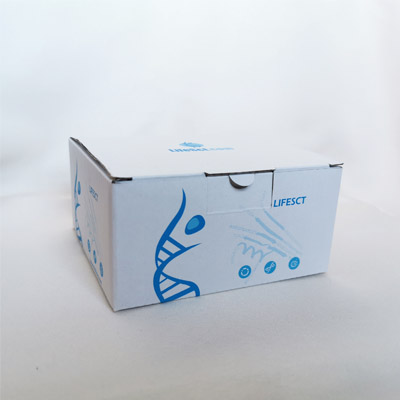
serum, plasma, tissue homogenates or other biological fluids.
Experimental method:
Sandwich
Shelf life:
12 months
Gene ID:
53
UniProt ID:
P11117
Components:
1. Pre-coated, ready to use 96-well strip plate 1
2. Plate sealer for 96 wells 2
3. Standard 2
4. Diluents buffer: 1×45 mL
5. Detection Reagent A: 1×120 μL
6. Detection Reagent B: 1×120 μL
7. TMB Substrate: 1×9 mL
8. Stop Solution: 1×6 mL
9. Wash Buffer (30× concentrate): 1×20 mL
Background
The protein encoded by the gene ACP2 belongs to the histidine acid phosphatase family, which hydrolyze orthophosphoric monoesters to alcohol and phosphate. This protein is localized to the lysosomal membrane, and is chemically and genetically distinct from the red cell acid phosphatase. Mice lacking this gene showed multiple defects, including bone structure alterations, lysosomal storage defects, and an increased tendency towards seizures. An enzymatically-inactive allele of this gene in mice showed severe growth retardation, hair-follicle abnormalities, and an ataxia-like phenotype. Alternatively spliced transcript variants have been found for this gene. A C-terminally extended isoform is also predicted to be produced by the use of an alternative in-frame translation termination codon via a stop codon readthrough mechanism.