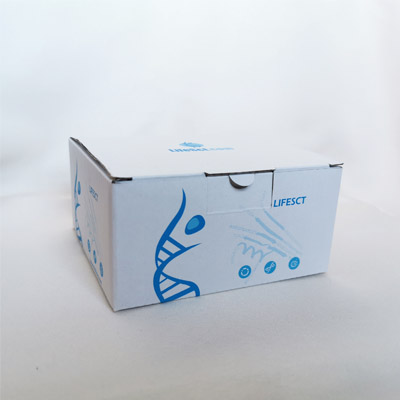
serum, plasma, tissue homogenates, cell lysates, cell culture supernates or other biological fluids.
Experimental method:
Sandwich
Shelf life:
12 months
Gene ID:
1082
UniProt ID:
P0DN86
Components:
1. Pre-coated, ready to use 96-well strip plate 1
2. Plate sealer for 96 wells 2
3. Standard 2
4. Diluents buffer: 1×45 mL
5. Detection Reagent A: 1×120 μL
6. Detection Reagent B: 1×120 μL
7. TMB Substrate: 1×9 mL
8. Stop Solution: 1×6 mL
9. Wash Buffer (30× concentrate): 1×20 mL
Background
This gene CFTR encodes a member of the ATP-binding cassette (ABC) transporter superfamily. The encoded protein functions as a chloride channel, making it unique among members of this protein family, and controls ion and water secretion and absorption in epithelial tissues. Channel activation is mediated by cycles of regulatory domain phosphorylation, ATP-binding by the nucleotide-binding domains, and ATP hydrolysis. Mutations in this gene cause cystic fibrosis, the most common lethal genetic disorder in populations of Northern European descent. The most frequently occurring mutation in cystic fibrosis, DeltaF508, results in impaired folding and trafficking of the encoded protein. Multiple pseudogenes have been identified in the human genome.