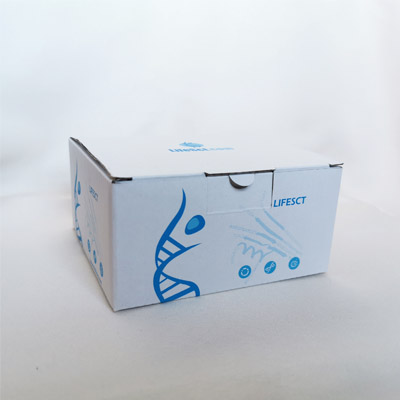
serum, plasma, tissue homogenates, cell lysates, cell culture supernates or other biological fluids.
Experimental method:
Sandwich
Shelf life:
12 months
Gene ID:
6376
UniProt ID:
P78423
Component:
1. Pre-coated, ready to use 96-well strip plate 1
2. Plate sealer for 96 wells 2
3. Standard 2
4. Diluents buffer: 1×45 mL
5. Detection Reagent A: 1×120 μL
6. Detection Reagent B: 1×120 μL
7. TMB Substrate: 1×9 mL
8. Stop Solution: 1×6 mL
9. Wash Buffer (30× concentrate): 1×20 mL
Background
This gene belongs to the CX3C subgroup of chemokines, characterized by the number of amino acids located between the conserved cysteine residues. This is the only member of the CX3C subgroup, which contains three amino acids between cysteine residues, resulting in a Cys-X-X-X-Cys configuration. The encoded protein contains an extended mucin-like stalk with a chemokine domain on top, and exists in both a membrane-anchored form where it acts as a binding molecule, or, in soluble form, as a chemotactic cytokine. The mature form of this protein can be cleaved at the cell surface, yielding different soluble forms that can interact with the G-protein coupled receptor, C-X3-C motif chemokine receptor 1 gene product. This gene plays a role in a wide range of diseases, including cancer, vasculitis, neuropathies, atherosclerosis, inflammatory diseases, and in human immunodeficiency virus infections.