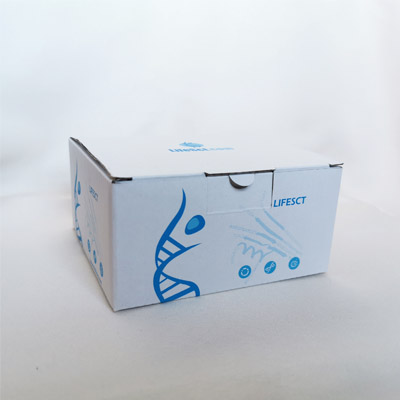
1. Pre-coated, ready to use 96-well strip plate 1
2. Plate sealer for 96 wells 2
3. Standard 2
4. Diluents buffer: 1×45 mL
5. Detection Reagent A: 1×120 μL
6. Detection Reagent B: 1×120 μL
7. TMB Substrate: 1×9 mL
8. Stop Solution: 1×6 mL
9. Wash Buffer (30× concentrate): 1×20 mL
Background
This gene is specifically expressed in the central nervous system (CNS). It encodes a member of the DOCK (dedicator of cytokinesis) family of guanine nucleotide exchange factors (GEFs). This protein, dedicator of cytokinesis 3 (DOCK3), is also known as modifier of cell adhesion (MOCA) and presenilin-binding protein (PBP). The DOCK3 and DOCK1, -2 and -4 share several conserved amino acids in their DHR-2 (DOCK homology region 2) domains that are required for GEF activity, and bind directly to WAVE proteins [Wiskott-Aldrich syndrome protein (WASP) family Verprolin-homologous proteins] via their DHR-1 domains. The DOCK3 induces axonal outgrowth in CNS by stimulating membrane recruitment of the WAVE complex and activating the small G protein Rac1. This gene is associated with an attention deficit hyperactivity disorder-like phenotype by a complex chromosomal rearrangement.