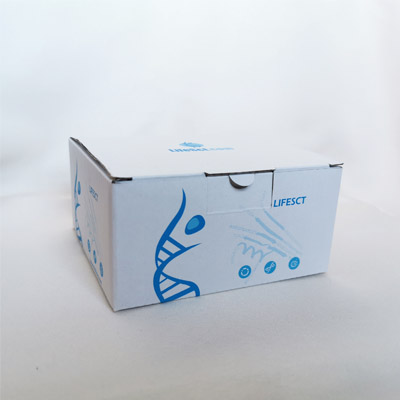
1. Pre-coated, ready to use 96-well strip plate 1
2. Plate sealer for 96 wells 2
3. Standard 2
4. Diluents buffer: 1×45 mL
5. Detection Reagent A: 1×120 μL
6. Detection Reagent B: 1×120 μL
7. TMB Substrate: 1×9 mL
8. Stop Solution: 1×6 mL
9. Wash Buffer (30× concentrate): 1×20 mL
Background
This gene F12 encodes coagulation factor XII which circulates in blood as a zymogen. This single chain zymogen is converted to a two-chain serine protease with an heavy chain (alpha-factor XIIa) and a light chain. The heavy chain contains two fibronectin-type domains, two epidermal growth factor (EGF)-like domains, a kringle domain and a proline-rich domain, whereas the light chain contains only a catalytic domain. On activation, further cleavages takes place in the heavy chain, resulting in the production of beta-factor XIIa light chain and the alpha-factor XIIa light chain becomes beta-factor XIIa heavy chain. Prekallikrein is cleaved by factor XII to form kallikrein, which then cleaves factor XII first to alpha-factor XIIa and then to beta-factor XIIa. The active factor XIIa participates in the initiation of blood coagulation, fibrinolysis, and the generation of bradykinin and angiotensin. It activates coagulation factors VII and XI. Defects in this gene do not cause any clinical symptoms and the sole effect is that whole-blood clotting time is prolonged.