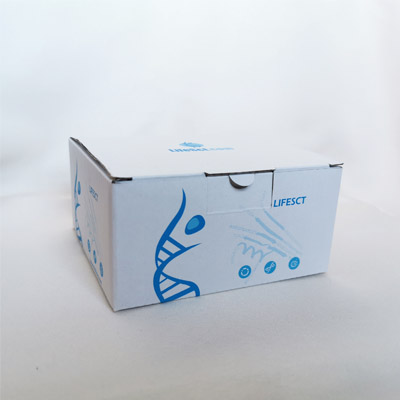
serum, plasma, tissue homogenates, cell lysates, cell culture supernates or other biological fluids.
Experimental method:
Sandwich
Shelf life:
16 months
Gene ID:
2252
UniProt ID:
P21781
Components:
1. Pre-coated, ready to use 96-well strip plate 1
2. Plate sealer for 96 wells 2
3. Standard 2
4. Standard Diluent 1×10 mL
5. Detection Solution A 1×6 mL
6. Detection Solution B 1×6 mL
7. TMB Substrate 1×4.5 mL
8. Stop Solution: 1×3 mL
9. Wash Buffer (30× concentrate): 1×10 mL
Background
The protein encoded by the gene FGF7 is a member of the fibroblast growth factor (FGF) family. FGF family members possess broad mitogenic and cell survival activities, and are involved in a variety of biological processes, including embryonic development, cell growth, morphogenesis, tissue repair, tumor growth and invasion. This protein is a potent epithelial cell-specific growth factor, whose mitogenic activity is predominantly exhibited in keratinocytes but not in fibroblasts and endothelial cells. Studies of mouse and rat homologs of this gene implicated roles in morphogenesis of epithelium, reepithelialization of wounds, hair development and early lung organogenesis.