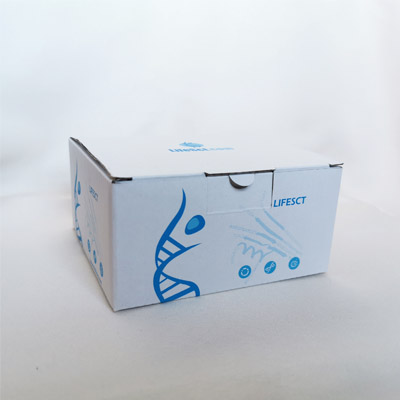
tissue homogenates, cell lysates or other biological fluids.
Experimental method:
Sandwich
Shelf life:
12 months
Gene ID:
81621
UniProt ID:
Q96I82
Components:
1. Pre-coated, ready to use 96-well strip plate 1
2. Plate sealer for 96 wells 2
3. Standard 2
4. Diluents buffer: 1×45 mL
5. Detection Reagent A: 1×120 μL
6. Detection Reagent B: 1×120 μL
7. TMB Substrate: 1×9 mL
8. Stop Solution: 1×6 mL
9. Wash Buffer (30× concentrate): 1×20 mL
Background
This gene encodes a secreted member of the insulin growth factor-binding protein (IGFBP) superfamily. The protein contains an insulin growth factor-binding domain in its N-terminal region, a Kazal-type serine protease inhibitor and follistatin-like domain in its central region, and an immunoglobulin-like domain in its C-terminal region. Studies of the mouse ortholog suggest that this protein may function in bone development and bone regeneration. This gene is hypomethylated and over-expressed in high-grade glioma compared to low-grade glioma, and thus the hypomethylated gene may be associated with cell proliferation and the shorter survival of patients with high-grade glioma. It is also one of numerous genes found to be deleted in a novel 5.54 Mb interstitial deletion, which is associated with multiple congenital anomalies. Alternative splicing results in multiple transcript variants.