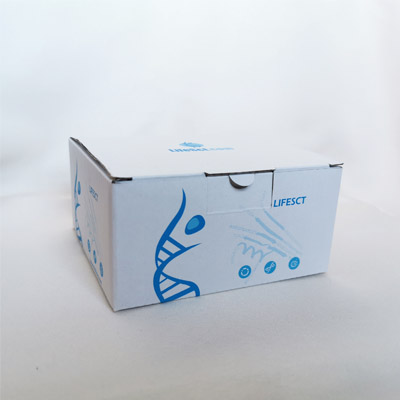
serum, plasma, tissue homogenates, cerebrospinal fluid, breast milk or other biological fluids.
Experimental method:
Sandwich
Shelf life:
12 months
Gene ID:
5653
UniProt ID:
Q92876
Components:
1. Pre-coated, ready to use 96-well strip plate 1
2. Plate sealer for 96 wells 2
3. Standard 2
4. Diluents buffer: 1×45 mL
5. Detection Reagent A: 1×120 μL
6. Detection Reagent B: 1×120 μL
7. TMB Substrate: 1×9 mL
8. Stop Solution: 1×6 mL
9. Wash Buffer (30× concentrate): 1×20 mL
Background
This gene encodes a member of the kallikrein subfamily of the peptidase S1 family of serine proteases. Growing evidence suggests that many kallikreins are implicated in carcinogenesis and some have potential as novel cancer and other disease biomarkers. The encoded preproprotein is proteolytically processed to generate the mature protease. Expression of this protease is regulated by steroid hormones and may be elevated in multiple human cancers and in serum from psoriasis patients. The encoded protease may participate in the cleavage of amyloid precursor protein and alpha-synuclein, thus implicating this protease in Alzheimer's and Parkinson's disease, respectively. This gene is located in a gene cluster on chromosome 19. Alternative splicing results in multiple transcript variants, at least one of which encodes an isoform that is proteolytically processed.