LAP; CALM; CLTH; Clathrin assembly lymphoid myeloid leukemia protein
Species:
Human
Sample type:
tissue homogenates, cell lysates or other biological fluids.
Experimental method:
Sandwich
Shelf life:
12 months
Gene ID:
8301
UniProt ID:
Q13492
Components:
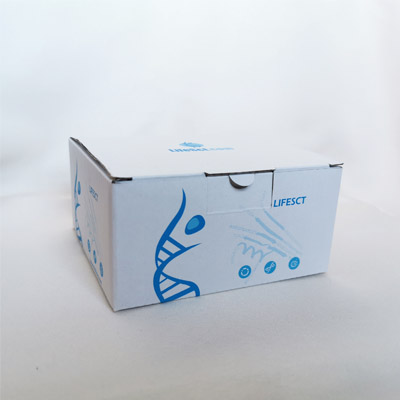
1. Pre-coated, ready to use 96-well strip plate 1
2. Plate sealer for 96 wells 2
3. Standard 2
4. Diluents buffer: 1×45 mL
5. Detection Reagent A: 1×120 μL
6. Detection Reagent B: 1×120 μL
7. TMB Substrate: 1×9 mL
8. Stop Solution: 1×6 mL
9. Wash Buffer (30× concentrate): 1×20 mL
Background
This gene encodes a clathrin assembly protein, which recruits clathrin and adaptor protein complex 2 (AP2) to cell membranes at sites of coated-pit formation and clathrin-vesicle assembly. The protein may be required to determine the amount of membrane to be recycled, possibly by regulating the size of the clathrin cage. The protein is involved in AP2-dependent clathrin-mediated endocytosis at the neuromuscular junction. A chromosomal translocation t(10;11)(p13;q14) leading to the fusion of this gene and the MLLT10 gene is found in acute lymphoblastic leukemia, acute myeloid leukemia and malignant lymphomas. The polymorphisms of this gene are associated with the risk of Alzheimer disease. Multiple alternatively spliced transcript variants encoding different isoforms have been found for this gene.