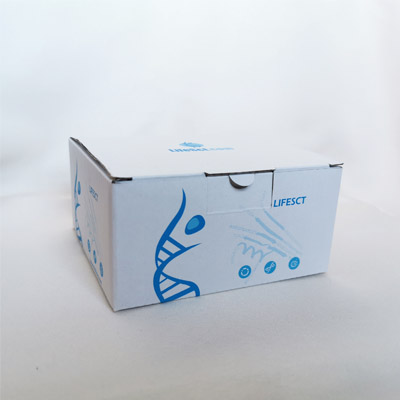
tissue homogenates, cell lysates or other biological fluids.
Experimental method:
Sandwich
Shelf life:
12 months
Gene ID:
14184
UniProt ID:
Q61851
Components:
1. Pre-coated, ready to use 96-well strip plate 1
2. Plate sealer for 96 wells 2
3. Standard 2
4. Diluents buffer: 1×45 mL
5. Detection Reagent A: 1×120 μL
6. Detection Reagent B: 1×120 μL
7. TMB Substrate: 1×9 mL
8. Stop Solution: 1×6 mL
9. Wash Buffer (30× concentrate): 1×20 mL
Background
This gene encodes a member of the fibroblast growth factor receptor family. Members of this family are highly conserved proteins that differ from one another in their ligand affinities and tissue distribution. A representative protein consists of an extracellular region composed of three immunoglobulin-like domains, a single hydrophobic membrane-spanning segment, and a cytoplasmic tyrosine kinase domain. The extracellular portion of the protein interacts with fibroblast growth factors, setting in motion a cascade of downstream signals, ultimately influencing mitogenesis and differentiation. This family member binds acidic and basic fibroblast growth hormone and plays a role in bone development and maintenance. Mutations in this gene may be associated with craniosynostosis and multiple types of skeletal dysplasia. A pseudogene of this gene is located on chromosome 1. Alternatively spliced transcript variants encoding multiple isoforms have been observed for this gene.