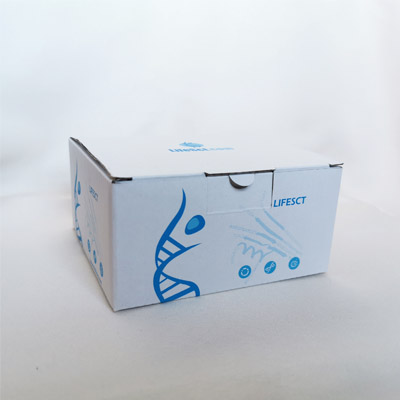
serum, plasma, tissue homogenates or other biological fluids.
Experimental method:
Sandwich
Shelf life:
12 months
Gene ID:
16204
UniProt ID:
P51162
Components:
1. Pre-coated, ready to use 96-well strip plate 1
2. Plate sealer for 96 wells 2
3. Standard 2
4. Diluents buffer: 1×45 mL
5. Detection Reagent A: 1×120 μL
6. Detection Reagent B: 1×120 μL
7. TMB Substrate: 1×9 mL
8. Stop Solution: 1×6 mL
9. Wash Buffer (30× concentrate): 1×20 mL
Background
The protein encoded by this gene is part of the fatty acid binding protein family (FABP). FABPs are a family of small, highly conserved, cytoplasmic proteins that bind long-chain fatty acids and other hydrophobic ligands and participate in fatty acid uptake, transport, and metabolism. This protein functions within the ileum, the distal 25-30% of the small intestine, and plays a role in enterohepatic circulation of bile acids and cholesterol homeostasis. In humans, it has been reported that polymorphisms in FABP6 confer a protective effect in obese individuals from developing type 2 diabetes. In mice deficiency of this gene affects bile acid metabolism in a gender-specific manner and was reported to be required for efficient apical to basolateral transport of conjugated bile acids.