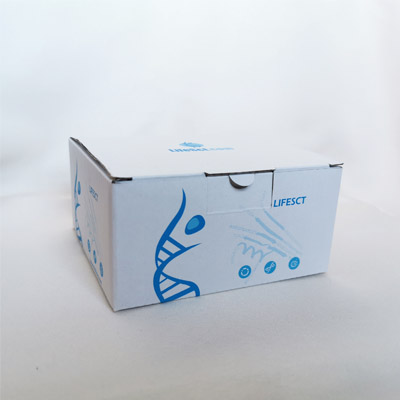
serum, plasma, tissue homogenates, cell lysates, cell culture supernates or other biological fluids.
Experimental method:
Sandwich
Shelf life:
12 months
Gene ID:
14824
UniProt ID:
P28798
Components:
1. Pre-coated, ready to use 96-well strip plate 1
2. Plate sealer for 96 wells 2
3. Standard 2
4. Diluents buffer: 1×45 mL
5. Detection Reagent A: 1×120 μL
6. Detection Reagent B: 1×120 μL
7. TMB Substrate: 1×9 mL
8. Stop Solution: 1×6 mL
9. Wash Buffer (30× concentrate): 1×20 mL
Background
Enables NMDA glutamate receptor activity and calcium channel activity. Involved in glutamate receptor signaling pathway and regulation of synaptic plasticity. Acts upstream of or within several processes, including excitatory postsynaptic potential; learning or memory; and long-term synaptic potentiation. Located in several cellular components, including cell surface; synaptic membrane; and synaptic vesicle. Part of NMDA selective glutamate receptor complex. Is active in glutamatergic synapse and postsynaptic density membrane. Is expressed in several structures, including central nervous system; eye; hindlimb phalanx; intestine; and limb mesenchyme. Human ortholog(s) of this gene implicated in several diseases, including Huntington's disease; alcohol dependence; bipolar disorder; colorectal cancer; and heroin dependence. Orthologous to human GRIN2A (glutamate ionotropic receptor NMDA type subunit 2A).