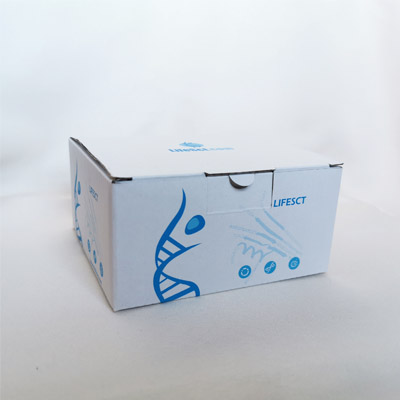
1. Pre-coated, ready to use 96-well strip plate 1
2. Plate sealer for 96 wells 2
3. Standard 2
4. Diluents buffer: 1×45 mL
5. Detection Reagent A: 1×120 μL
6. Detection Reagent B: 1×120 μL
7. TMB Substrate: 1×9 mL
8. Stop Solution: 1×6 mL
9. Wash Buffer (30× concentrate): 1×20 mL
Background
This gene encodes a precursor protein that belongs to the lysyl oxidase family of proteins. The secreted proprotein is proteolytically processed to an active mature peptide and a propeptide. This propeptide is thought to function in tumor suppression by inhibiting the Ras signaling pathway. The active enzyme plays a role in cross-linking of collagen and elastin and is essential for development of cardiovascular and respiratory systems, and development of skin and connective tissue. Alternative splicing results in multiple transcript variants.