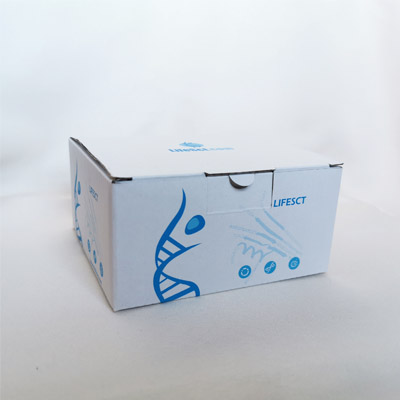
Trem2a; Trem2b; Trem2c; Triggering receptor expressed on monocytes 2
Species:
Mouse
Sample type:
serum, plasma, tissue homogenates, cell lysates or other biological fluids.
Experimental method:
Sandwich
Shelf life:
12 months
Gene ID:
83433
UniProt ID:
Q99NH8
Components:
1. Pre-coated, ready to use 96-well strip plate 1
2. Plate sealer for 96 wells 2
3. Standard 2
4. Diluents buffer: 1×45 mL
5. Detection Reagent A: 1×120 μL
6. Detection Reagent B: 1×120 μL
7. TMB Substrate: 1×9 mL
8. Stop Solution: 1×6 mL
9. Wash Buffer (30× concentrate): 1×20 mL
Background
The protein encoded by this gene is part of the immunoglobulin and lectin-like superfamily and functions as part of the innate immune system. This gene forms part of a cluster of genes on mouse chromosome 17 thought to be involved in innate immunity. This protein associates with the adaptor protein Dap-12 and recruits several factors, such as kinases and phospholipase C-gamma, to form a receptor signaling complex that activates myeloid cells, including dendritic cells and microglia. In humans homozygous loss-of-function mutations in this gene cause Nasu-Hakola disease and mutations in this gene may be risk factors to the development of Alzheimer's disease. In mouse mutations of this gene serve as a pathophysiological model for polycystic lipomembranous osteodysplasia with sclerosing leukoencephalopathy (Nasu-Hakola disease) and for inflammatory bowel disease. Alternative splicing results in multiple transcript variants that encode different protein isoforms.