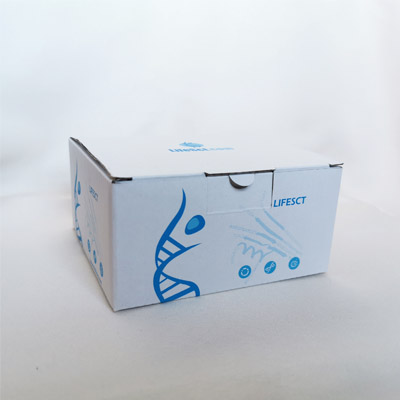
tissue homogenates, cell lysates or other biological fluids.
Experimental method:
Sandwich
Shelf life:
12 months
Gene ID:
24410
UniProt ID:
Q00960
Components:
1. Pre-coated, ready to use 96-well strip plate 1
2. Plate sealer for 96 wells 2
3. Standard 2
4. Diluents buffer: 1×45 mL
5. Detection Reagent A: 1×120 μL
6. Detection Reagent B: 1×120 μL
7. TMB Substrate: 1×9 mL
8. Stop Solution: 1×6 mL
9. Wash Buffer (30× concentrate): 1×20 mL
Background
Enables several functions, including enzyme binding activity; glutamate binding activity; and monoatomic ion channel activity. Contributes to extracellularly glutamate-gated ion channel activity and monoatomic cation channel activity. Involved in several processes, including modulation of chemical synaptic transmission; nervous system development; and regulation of signal transduction. Located in several cellular components, including dendrite; postsynaptic density, intracellular component; and postsynaptic membrane. Part of NMDA selective glutamate receptor complex. Is active in glutamatergic synapse; parallel fiber to Purkinje cell synapse; and presynaptic membrane. Used to study hyperhomocysteinemia and transient cerebral ischemia. Biomarker of cognitive disorder; placental insufficiency; post-traumatic stress disorder; status epilepticus; and withdrawal disorder. Human ortholog(s) of this gene implicated in several diseases, including Huntington's disease; alcohol dependence; bipolar disorder; colorectal cancer; and heroin dependence. Orthologous to human GRIN2A (glutamate ionotropic receptor NMDA type subunit 2A).