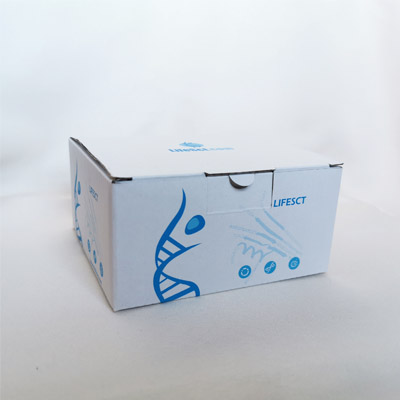
tissue homogenates, cell lysates or other biological fluids.
Experimental method:
Sandwich
Shelf life:
12 months
Gene ID:
29499
UniProt ID:
Q63673
Components:
1. Pre-coated, ready to use 96-well strip plate 1
2. Plate sealer for 96 wells 2
3. Standard 2
4. Diluents buffer: 1×45 mL
5. Detection Reagent A: 1×120 μL
6. Detection Reagent B: 1×120 μL
7. TMB Substrate: 1×9 mL
8. Stop Solution: 1×6 mL
9. Wash Buffer (30× concentrate): 1×20 mL
Background
This gene encodes a selenoprotein that is predominantly expressed in the liver and secreted into the plasma. This selenoprotein is unique in that it contains multiple selenocysteine (Sec) residues per polypeptide (10 in rat), and accounts for most of the selenium in plasma. It has been implicated as an extracellular antioxidant, and in the transport of selenium to extra-hepatic tissues via apolipoprotein E receptor-2 (apoER2). Mice lacking this gene exhibit neurological dysfunction, suggesting its importance in normal brain function. Sec is encoded by the UGA codon, which normally signals translation termination. The 3' UTRs of selenoprotein mRNAs contain a conserved stem-loop structure, designated the Sec insertion sequence (SECIS) element, that is necessary for the recognition of UGA as a Sec codon, rather than as a stop signal. The mRNA for this selenoprotein contains two SECIS elements. Alternatively spliced transcript variants have been found for this gene.